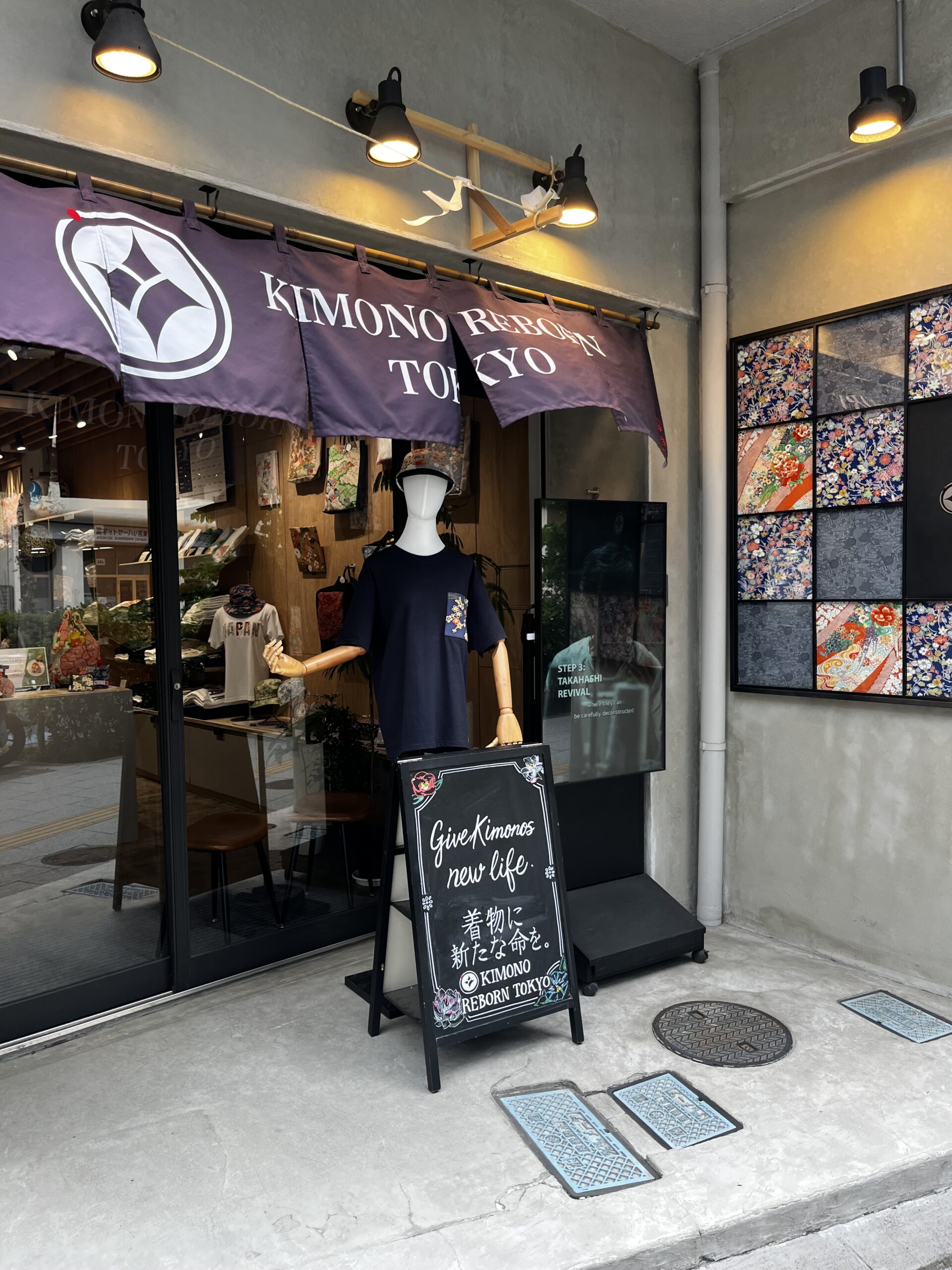
Kimono Reborn Tokyo is a boutique dedicated to giving new life to vintage kimono through thoughtful redesign and upcycling. Rather than preserving kimono only as archival textiles, the store transforms them into contemporary clothing and accessories that can be worn in everyday life.
The concept is simple but powerful: protect traditional textiles by ensuring they continue to be used, appreciated, and passed forward in a new form.
A Shared Mission: Preserving Kimono Through Reuse
A conversation with the staff at Kimono Reborn Tokyo revealed a clear and consistent philosophy behind their work. Their approach is not only about design, but about cultural continuity—keeping kimono relevant in modern life by adapting them to current needs and aesthetics.
This mission closely aligns with the philosophy behind Tokita Kobo, where kimono fabrics are also upcycled into jewelry, purses, scrunchies, and other accessories. In both cases, the goal is not to preserve kimono as static heritage objects, but to allow them to continue living through transformation.
The shared values can be summarized as:
- Respect for traditional kimono textiles
- Reduction of textile waste through reuse
- Transformation into functional modern items
- Storytelling through fabric and pattern
- Bridging Japanese heritage with contemporary lifestyle
From Kimono to Contemporary Design
At Kimono Reborn Tokyo, vintage kimono fabrics are carefully selected and reworked into garments and accessories. Each piece carries visible traces of its past life—woven patterns, subtle fading, and hand-dyed details—making every item unique.
This design approach highlights a key idea: imperfection and age are not flaws, but sources of beauty and character.
Rather than hiding the history of the fabric, the designs emphasize it.
A Moment of Connection
Speaking with the staff created a strong sense of alignment. There was an immediate understanding that kimono upcycling is not only a design practice, but also a cultural responsibility.
That shared awareness felt important: different creators, different approaches, but a unified direction—ensuring kimono textiles remain part of everyday life instead of becoming distant artifacts.
For Tokita Kobo, which also works with kimono fabrics in a contemporary form, this connection feels especially meaningful.
Why This Movement Matters
Kimono fabrics are often made with high-quality silk, intricate weaving, and detailed dyeing techniques that are difficult to replicate today. However, many kimono are no longer worn regularly in modern life.
Upcycling initiatives like Kimono Reborn Tokyo address this gap by:
- Extending the life cycle of existing garments
- Preserving traditional textile craftsmanship
- Reducing textile waste
- Creating accessibility for younger generations
- Keeping cultural heritage visible in daily life
This is not only preservation—it is continuation through transformation.
Closing Reflection
Kimono Reborn Tokyo and Tokita Kobo operate in parallel rather than in opposition or comparison. Both engage with the same material heritage and the same question: how to keep kimono relevant without reducing its cultural depth.
They feel like two points on the same line—moving in different directions, yet connected by the same intention to keep kimono alive through use, design, and reinterpretation.
Tips: There are two more stores from their family group. Indigo Ninja, they have unique remake goods made from Yukata (Summer Kimono clothes), Tokyo Kimono Shoes, they have unique shoes made from kimono (and they are water resistant!).
Kimono Reborn Tokyo様 先日(6月2日)は偶然通りかかり立ち寄ったところ、InstagramでフォローしているKimono Reborn Tokyoさんだと気づき、ついスタッフの皆さまと長くお話しさせていただきました。御社のミッションに深く共感し、私自身も海外での活動をより一層頑張っていこうと、改めて気持ちを引き締める機会となりました。このメッセージが届きますことを願っておりますとともに、今後のますますのご発展とご多幸を心よりお祈り申し上げます。時田工房 時田 有紀