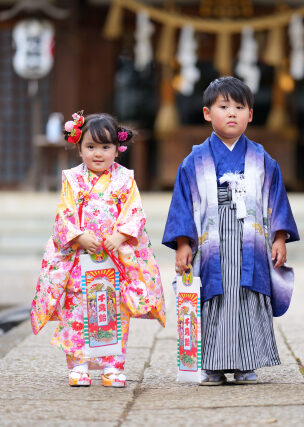
Children’s kimono in Japan reflect tradition, symbolism, and seasonal aesthetics. While the basic structure of kimono is similar for boys and girls, there are clear differences in color, pattern, formality, and accessories.
Color Palette
Girls’ Kimono
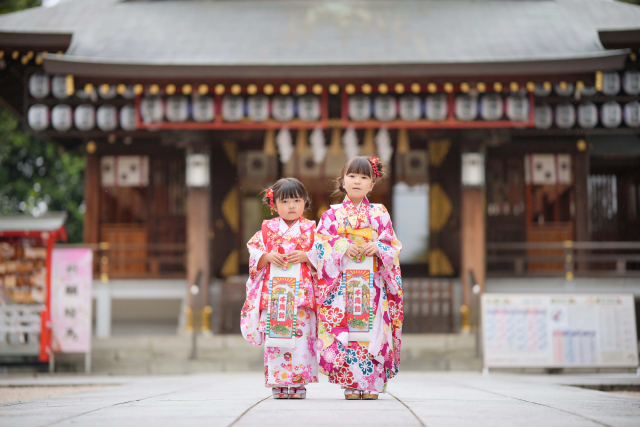
- Bright, soft, or pastel tones such as red, pink, yellow, and light blue
- Floral-inspired palettes that emphasize elegance and sweetness
- Often layered with contrasting collar colors for added visual richness
Boys’ Kimono
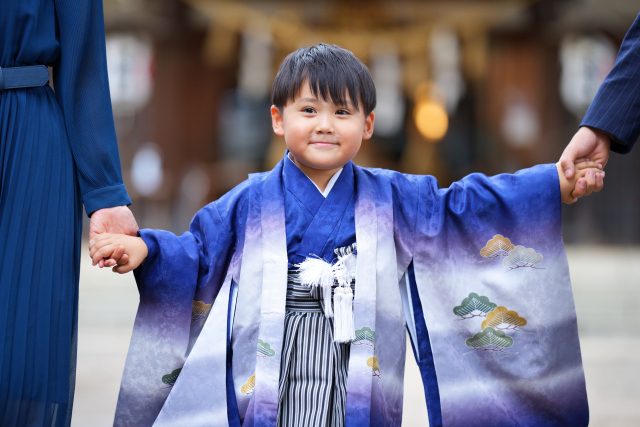
- More subdued and dignified tones such as navy, black, dark green, gray, or brown
- Strong, clean color blocking rather than delicate gradients
The distinction reflects traditional aesthetics: softness and floral beauty for girls, strength and refinement for boys.
Patterns and Motifs
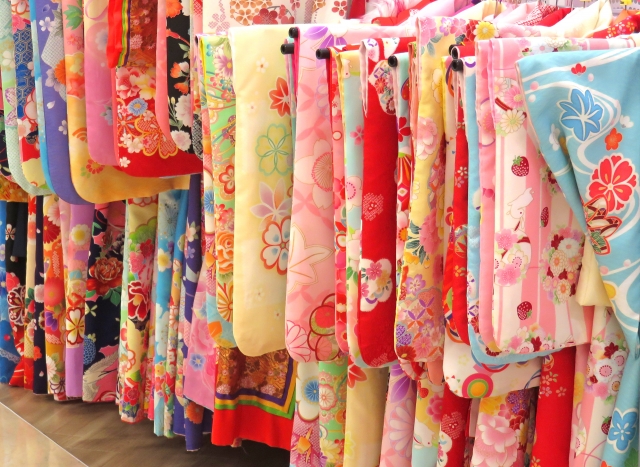
Girls
- Floral designs such as cherry blossoms, plum blossoms, peonies, and chrysanthemums
- Butterflies, temari balls, flowing ribbons
- Patterns symbolizing beauty, grace, and growth
Boys
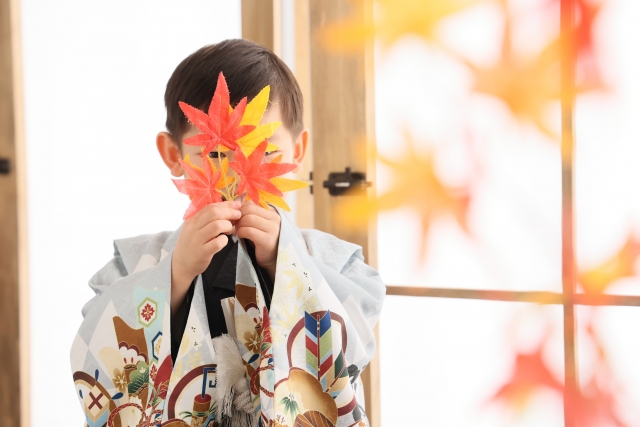
- Family crests (kamon)
- Symbols of strength and success such as:
- Hawks
- Dragons
- Samurai helmets (kabuto)
- Pine trees or cranes
Boys’ motifs often carry messages of courage, resilience, and future achievement.
Garment Structure and Layers
Girls
- May wear a furisode-style kimono (long swinging sleeves), especially for celebrations
- Decorative obi tied in elaborate bows
- Coordinated accessories such as:
- Hair ornaments (kanzashi)
- Small handbags
- Zori sandals
Boys
- Typically wear a kimono with:
- Hakama (pleated trousers)
- Haori (formal jacket worn over kimono)
- Obi is narrower and simpler
- Minimal accessories
The overall silhouette for boys is structured and formal, while girls’ outfits appear more decorative and flowing.
Formal Occasions
Both boys and girls wear kimono for special events such as:
- Shichi-Go-San (7-5-3 Festival)
- New Year celebrations
- Weddings
- Shrine visits
However, styling differs:
- At age 3: both boys and girls may wear kimono.
- At age 5: boys typically wear hakama.
- At age 7: girls wear more elaborate kimono with formal obi.
Growth and Adjustability
Traditionally, children’s kimono are designed to grow with the child. Extra fabric is sewn into the shoulders and waist so the length can be adjusted over time. This practical construction applies to both boys’ and girls’ kimono, reflecting thoughtful craftsmanship and sustainability.
Summary
| Feature | Girls’ Kimono | Boys’ Kimono |
|---|---|---|
| Colors | Bright, pastel, floral | Dark, muted, bold |
| Motifs | Flowers, butterflies | Hawks, dragons, crests |
| Silhouette | Flowing sleeves, decorative obi | Hakama, structured form |
| Accessories | Hair ornaments, small bags | Minimal, formal elements |
Children’s kimono are more than garments. They visually express wishes for a child’s future—beauty and grace for girls, strength and success for boys—while preserving craftsmanship that adapts as they grow.